Tag: Eco Friendly (Page 2 of 2)

The Best Flea Exterminator in Seattle

When it comes to getting rid of fleas, a flea exterminator can be your savior! Getting rid of fleas is not an easy task, as these pesky little parasites can thrive anywhere in your house. So, when approaching the dreaded flea problem, we like to take a multi-model approach.

Flea Spray for House: Here’s What You Need to Know

Flea eggs and larvae can thrive on your carpets and within the cracks of your wooden floors. So, vacuuming them up isn’t going to solve the problem alone. Chemical treatment in insecticides is highly recommended for eliminating adult fleas, existing eggs, and larvae in the environment. Professional flea exterminators will often use insecticides containing both an adulticide and an insect growth regulator. 

Adulticide: An adulticide is a chemical compound that explicitly targets adult fleas. 

Insect Growth Regulator: Also known as IGRs, these chemical compounds often target the eggs and larval stages

Spraying for Fleas: A Word on Safety

If misused, the insecticides used to eliminate fleas can be harmful to human health. To minimize adverse reactions and risks to human health, we recommend seeking out the expertise of a professional flea exterminator. Before the is treated with a flea spray, your pest control providers may suggest the following:

  • Unplug any air circulation systems.
  • Put away open food, cutlery, and loose items. 
  • Cover or completely remove any fish tanks from the house.
  • Ensure windows are left open for maximum ventilation
  • After spraying the home with insecticides, do not let pets or people into the house.

How to Get Rid of Fleas in the House Forever

So, you’ve gotten rid of the fleas, and now you’re wondering—how do I get rid of fleas in the house forever? Well, the best way to eliminate fleas is to prevent them from establishing in the first place.

  1. Talk to your veterinarian: Fleas gain entry to your house through your pets. This is why it’s essential to talk to your veterinarian about what’s going to be the best flea treatment for your dog or cat. Flea treatment for pets comes in many forms, but the most popular and effective ones tend to be topical solutions and chews. 
  2. Control the rodent population around your home: Just like our pets, rats and mice can harbor large burdens of fleas and ticks. So, if you have a rodent problem in your home, be it in the attic or within a crawlspace, then it’s time to call a professional pest control team to help you deal with these pesky critters.

Getting rid of rats and mice is no easy task! Talk to us today to learn more about natural rodent control in Seattle

Fleas in House Treatment

The first thing a flea exterminator will address is the potential sources of ongoing infestations. Flea eggs are laid directly on your pet but will drop off into the surrounding environment, which can include pet bedding, couches, carpets, and more. 

To reduce the environmental contamination of fleas and their pesky eggs, we recommend the following:

  1. Vacuum all carpet and furniture your pet could have been in contact with; these couches, rugs, and floors. Immediately dispose of the bag/canister into an outside garbage bin. 
  2. Pet beds and laundry: Clean all pet beds, laundry, and bed covers your pet may have been in contact with. 

How to Get Rid of Fleas on Humans
best-flea-exterminator-seattle

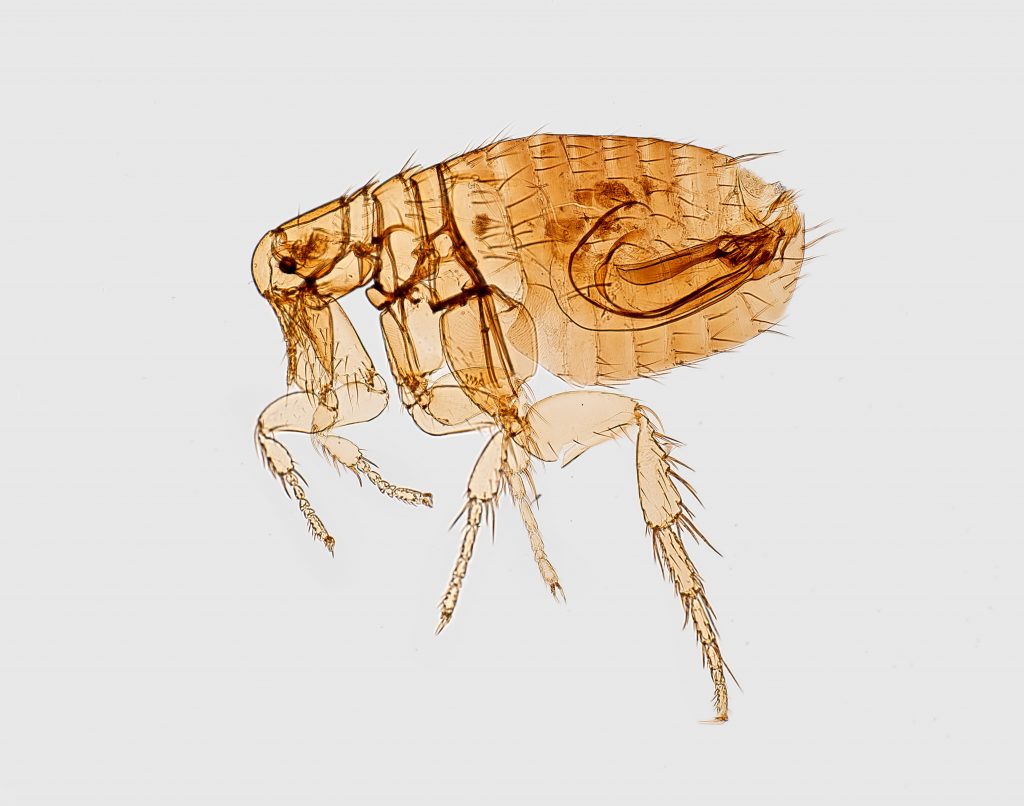
Fleas don’t just harm your pets! They can also harm you. Although these bugs seem too little to do much damage, it’s important to remember that they can carry harmful bacteria and parasites, which can indeed spread to humans. According to the CDC, some diseases commonly spread by fleas include:

  • Flea-borne (murine) typhus: This is often associated with the rat and cat flea. 
  • Cat Scratch Disease: Fleas can transmit a bacteria known as Bartonella henselae to feral and domestic cats. Humans acquire the disease after being scratched by an infected cat. Children appear to be most susceptible to cat-scratch disease.

Flea Exterminator: Getting Rid of Fleas Professionally

Although it may sound easy, exterminating fleas from one’s home is truly a tedious task that can prove to be quite a challenge. Unfortunately, given the resilient nature of these critters, flea extermination isn’t considered a one-time-only kind of job. Fortunately, you don’t have to deal with these pesky critters alone! If you’ve got an ongoing flea infestation or if you simply don’t have the time to get rid of the fleas in your home, then we are here to help! 

We at Parker Eco Pest Control can help you deal with any flea infestation! No matter how big, small, or challenging the job, our team of professional pest control exterminators work-one-on-one with you and your family to determine the source of the fleas and the protocol needed to eliminate them. 

So, talk to us today to learn more about flea control and flea spraying in Seattle. 

How to Get Rid of Mice Naturally: The Complete Guide

A preview of the free ebook: The Complete Guide: How to get rid of mice naturally
Download the free eBook

This comprehensive ebook will tell you everything you need to know about getting rid of mice in your house using natural, poison-free methods. A printable PDF version is available for free download.

Looking for specific info? Jump to a step:

  1. Make your house less attractive to mice (risk factors & tips)
  2. Seal up your house (how to find & seal holes)
  3. Trap mice already in the house (trap varieties, placement & more)
  4. Natural mouse control outdoors (owl boxes & automatic traps)

Step 1. Make your house less attractive to mice

en skirting and a dirt crawlspace

Common risk factors for mice

  • Dirt crawl spaces
  • Vacant structures nearby
  • Vegetable gardens
  • Rock retaining walls
  • A deck or porch up against the house
  • Greenspace next door
  • A poorly maintained home on the block (we know you know the one)
  • A chicken coop nearby

It’s like the old adage, “You don’t have to run faster than the bear, just faster than your friend.” You don’t have to make your house mouse-proof, you just have to make it less attractive than your neighbor’s house. Mice will go where it’s easiest to get water, food, and shelter.

Natural ways to reduce interest from mice…

Keep mice out of trash
Bungee your garbage bins to keep the lids snug
GlassCanisterMice
Seal food in airtight containers like glass canisters
WoodPilesAttractMice Clear a 1 foot perimeter around your house, including brush, wood piles, rockery, etc.
Birdbathwatermice
Remove standing water like bird baths
DogpoopattractsmiceClean up dog poop since it is full of protein, carbs, and other things mice like to eat
BirdseedattractsmiceKeep bird seed off the ground by investing in a rodent-proof bird feeder and installing it at least 6 feet from “launch pads” like fences or trees
BerrysattractmiceTrim fruit trees and berry bushes on the bottom and sides to prevent rodents coming up for a snack

Step 2. Seal up your house

How to find mouse entry holes

Check your utility lines to ensure pass-through holes are snug:

  • Sink supply and drain lines
  • Plumbing stacks on the outside of the house
  • Gas lines coming into your kitchen or laundry room
  • Electrical lines, particularly through exterior walls

Verify all utility vents have tight wire mesh and snug pass-through holes:

  • Dryer vents
  • Bathroom fan vents
  • Kitchen fan vents

Weather-proof your doors:

  • Garage doors should have weather stripping to close gaps
  • Cracks in concrete pads (such as the area below your garage door) should be filled for a seamless seal with the door above
  • Exterior doors should hang plumb and square so they seal tightly

Scope out your roof for easy access points, then double down on wire mesh:

  • Dormers have complex joints between shingles, fascia boards, and windows that require precise cuts to stay mouse-proof. Time and poor craftsmanship can create gaps.
  • Attic vents are necessary to keep moisture at bay but can decay with time. Wasp nests, bird nests, and other animal activity can also puncture your vent grates.
  • Chimney caps are metal boxes that cover the hole at the top of your chimney. Check yours for gaps or rust. If you don’t have one, buy one for less than $100.

How to install wire mesh for mouse-proofing

Wire mesh with 1/4 inch holes and large headed screws

Select your wire mesh: Pick a mesh with quarter inch holes and make sure it’s easy to bend. We recommend galvanized mesh since it has a special coating to resist rust, making it last longer. You can buy products like this at most hardware stores for about $10. 

Select your screws: The ideal screw for installing mesh has a large head so it doesn’t pass through the holes in the wire. Again, we recommend galvanized screws to resist rust. Try to keep the length to about an inch and keep the diameter to a minimum. Using a oversized screws means making oversized holes in your house.

Installing your wire mesh: Cut a section of wire that extends at least an inch beyond the edge of the hole in all directions. Bend the wire so it fits snuggly inside the corner or around edges. If there is slack in your mesh the mice will simply push under it. Anchor the mesh with screws, about one every four inches. When on your roof, DO NOT anchor directly into your shingles or you risk creating a leak.

Can you use spray foam or steel wool instead of wire mesh?

Yes, but we don’t recommend it.

Step 3. Trap mice already in the house

There are two key factors in making sure you’ll get rid of mice naturally– picking the right trap and placing it properly. No matter what type of trap you use we recommend baiting it with peanut butter. It’s cheap, natural, and incredibly tempting to mice.

Poison sketch

Why you shouldn’t use poison baits

By far the most common type of mouse bait is an anticoagulant rodenticide. That’s a fancy way to say that it thins the animal’s blood, causing them to bleed out and die slowly.

  • It’s cruel to kill the animals slowly over time.
  • Poison has terrible consequences for predators that eat mice like urban owls and your neighborhood cat.
  • The mice die in your walls. Some pest control companies claim the mice become thirsty, seek water, and then die outside. This is nonsense.

Get more information on the negative impacts of rodenticides from the  Audubon Society.

Owl image is courtesy of the Audubon Society

So why are poison baits so common?

Traditional pest control companies rely heavily on poison bait because it is cheap and any employee can do it without training. Setting out a bait box is faster and simpler than doing an inspection, sealing entry holes, and setting traps in strategic locations.

Types of all-natural mouse traps

T-Rex snap traps are reliable, humane, & reusable

Best natural mouse trap

The plastic T-Rex snap trap from Bell is a highly sensitive trap with interlocking teeth. They are much heavier than a traditional wooden trap so they stay put. You can also wash and reuse the traps indefinitely, so they are more eco-friendly than disposable traps. The plastic teeth have a lot of force, making for a quick and humane death. The traps have small holes in the base so you can feed a zip tie through and secure the traps on vertical pipes and beams. Parker Eco Pest Control uses these traps exclusively (and no, they didn’t pay us to say that!).

Wooden snap traps are tough to set properly

Victor snap trap

Victor mouse traps are the stereotypical trap you see in the movies baited with a piece of swiss cheese. Setting these traps involves pulling back the pin carefully, setting the bait, and putting it in the right spot without triggering it. They’re pretty finnicky and go off without catching a mouse often, especially compared to the T-Rex.

Glue traps can be cruel

Natural glue mouse trap

Glue traps come with a lot of well-deserved horror stories. Mice have been known to languish in the glue, starving to death. They sometimes chew off their own legs to free themselves. If you opt for a glue trap we suggest you use it ONLY under close supervision. As soon as you catch a mouse you should either:

  • Put on gloves and wipe the mouse down in olive oil to free it from the trap. Set it free outside.
  • Fill a bucket with water and drop the mouse and attached trap in for a quick death.

Live traps require daily supervision

Live natural mouse trap

If you can’t bring yourself to kill a mouse you might lean towards live traps. Simply place a tasty treat inside and let the door snap shut once the mouse is inside. Traps like this MUST be checked daily or you risk leaving a mouse to die slowly from starvation – this is far worse than a quick death from a snap trap.

Where to set mice free
Washington State law (and many other states) does not allow for relocation. That means you cannot release the mouse in a local park a mile away. Your best bet is releasing it back on your property and hoping you did a good job sealing up entry holes in your home.
What if the mouse isn’t dead?
Sadly, mice can sometimes set off a trap with a foot instead of their head. The humane thing to do is put the animal out of its misery
immediately. We recommend filling a bucket with water and placing the animal—trap and all—into the water until it drowns.

Where to put the traps

The simplest solution is putting traps where you find the most evidence of activity like droppings, urine smells, or rub marks.

Rub marks from a rodent

There is some finesse to how the traps are positioned. Mice are neophobic, meaning they are suspicious of new things. You need to make it as easy as possible to stumble into the trap. Look for narrow paths next to walls and hidden corners. Do not waste your time by simply opening your attic door and setting a trap on the open space inside.

Graphic on how to place natural mouse traps
Diagrams are courtesy of the
Internet Center for Wildlife Damage Management

Step 4. Natural mouse control outdoors

An automatic trap from Good Nature

Automatic traps

The A24 from Goodnature is a self-resetting trap that kills 24 mice with a single cartridge. Set it up outside, sit back, and wait. Parker Eco Pest Control will gladly install one.

Owl Boxes

Owls eat as many as 12 rodents a night! Installing an owl box gives you about a 50% chance of getting an owl every nesting season. Learn more about owls for natural mouse control on our blog.

Do you have questions or suggestions for improving this piece? Let us know! Email Info@ParkerEcoPestControl.com

Ants: Ecofriendly DIY Options

Whether you’re looking to solve the problem yourself or just need some tips between regular visits from Parker Eco Pest Control, we hope you find this information helpful.

Keep your eyes open

HouseAntEcoDIYPestControlAnts use scouts to find new food sources. A single ant out on patrol will locate food and create a trail back to the nest for other ants to follow. More and more ants swarm the area until the food is gone. If you see a single ant roaming across your counter, kill it.

Clean and seal your home

Your kitchen might already be clean but consider taking it to the next level. Wipe your counter and table down with a white vinegar and water mixture after food prep. Clean all dishes immediately. Store your food and dog food in air tight containers. Take your trash out daily. Even the smallest bits of food can attract an ant swarm.

There are also some basic home repairs that can make your home less hospitable for ants. Take a look around your house for damp or decaying wood. Do you have a leak under your sink? Is there a wet wood pile against the exterior wall? You can’t prevent ants from creating nests outside but you can calk cracks around doors and windows so it’s harder for them to enter. If you aren’t sure where the ants are coming from, stage a stakeout. Follow them all the way to the exterior wall where they are entering and seal it off. You likely can’t seal every hole, but look for the major ones.

Make a DIY eco repellantParkerEcoPestConrolDiatomaceousForAnts

  • Sprinkle diatomaceous earth along cracks where you see ants crawling. Distribute a thin, even layer of dust. This is not an immediate solution but it’s safe for kids and pets. It will slowly dehydrate and kill the bugs after coating them. This is one of our favorite products.
  • Wipe up ant trails with a mixture of vinegar and water.
  • Put a few drops of essential peppermint oil on a cotton ball. Wipe down cracks where you see ant trails and entry points. You can also leave the infused cotton ball in a pantry, cabinet or entry point. Refresh every few days. Be careful not to damage woodwork with the oil.

Plant a garden

While it might seem counterintuitive to plant more vegetation, consider some ant repelling herbs. Lavender, rosemary and mind have all been shown to repel ants.

Good luck! Feel free to call us if you have any additional questions about ecofriendly methods for controlling ants.

Newer posts »

Seattle

Parker Eco Pest Control
7307 Linden Ave N
Seattle, WA 98103

800-326-1698

Bellingham

Parker Eco Pest Control
432 W Bakerview Rd
Office C
Bellingham, WA 98226

360-326-1928

Everett

Parker Eco Pest Control
3218 Nassau St
Suite B
Everett, WA 98201

833-415-4440