Parker Eco Pest Control recently discovered Fresh Chalk, a cool
new platform for finding professional services in the Seattle area. If you need
a handyman, dentist, or a barber, this is the place to go.
Fresh Chalk operates differently than other review platforms
since they focus on recommendations from people in your social network. Their
model tries to replicate word of mouth recommendations in the digital age.
We found out about Fresh Chalk when a client recommended us on the platform. Since our business thrives on reviews, we were immediately intrigued. After doing some digging, we learned that they are local, women-led, and committed to transparency. That puts them miles ahead in our book!
Oh yeah…and people love us there
So we encourage you to check out the platform, make some honest recommendations, and see what Fresh Chalk holds for you. And hey…why not give Parker Eco Pest Control a thumbs up while you’re there?
Ever wondered what kids think about pest control? HiHo Kids
set out to answer that question on a segment of “Kids Meet A…”. They gather
people from all walks of life to answer the random, silly and downright bizarre
questions that can only come from kids. Owner Chris Parker spent a few hours in
the studio talking about bed bugs, squishing spiders, and protecting bees.
Behind the scenes
As it turns out, filming is hard work! The shoot took about 4 hours and resulted in just 4 minutes of footage. We have to give the HiHo Kids production team serious credit for weaving it all together.
Chris and the kids played with an apiary suit
In just two weeks the episode has been seen over 100,000
times on YouTube and Facebook. We owe HiHo Kids a HUGE thank you for involving
us in this fun opportunity!
Figuring out how much ant control costs for an apartment, condo, or homeowner’s association shouldn’t be hard. While it’s impossible to provide a firm bid without seeing the property, we’ve decided to share our basic quote formula with the world.
How to use the ant control cost calculator
Ongoing service or one-time treatment?
Some ants are polygenic, meaning they have multiple nests. It can be extremely difficult to solve an ant issue in a single visit to a multi-family building. We offer that option because it’s possible…but to be honest we usually require at least 2 visits. The first visit is the most expensive and takes the longest. Follow up visits are faster, easier, and less expensive. If your building gets ants every year it is probably less expensive and less of a pain to set up regular visits throughout the year. Deferring treatment can actually be more expensive than regular maintenance because we will charge more to get the issue back under control.
Treat all units, or only some?
Most pest control companies charge “by the door” or unit and assume that all units of a property should be treated. We believe that over applying pesticides is wasteful and potentially harmful. We’ll inspect all the units and advise which should be treated. You will be charged per unit, per visit. For example, we might treat 10 units on the first visit and only 5 on the next visit, saving you money.
Why use “ground floor” square footage?
We apply a perimeter spray around the exterior of the building’s ground floor — basically anywhere that touches ground and ants can enter. It takes less time and fewer materials to apply a perimeter spray around a tall skinny building than a short and squat building.
Other factors that impact ant control cost
This calculator is a great starting point but it is not fool proof. Other factors that impact cost are:
Your location. Some areas like Ballard are ant hotbeds. That entire neighborhood is basically one giant ant nest and you will almost certainly need ongoing service.
The size and location of the ant nests. Ant nests outside the building are much easier to treat than nests inside the walls or foundation.
Cleanliness of the residents. As an apartment manager or HOA it can be frustrating when one unit or resident is the source of the issue. If they aren’t willing or able to put food in air-tight canisters and keep the apartment clean, you will have ongoing issues.
Are condos, apartments and HOAs priced the same?
Generally yes. We don’t distinguish between who owns the property or how it is managed when setting prices. One exception might be a property manager who has multiple buildings and is seeking bulk pricing on multiple properties.
Log homes are beautiful and unique structures that come with
unusual maintenance challenges. Four generations of the Parker family have
enjoyed a log home on the Washington peninsula and we’ve learned that proper
maintenance is key. Log homes are often more susceptible to rodents, crawling
insects, and wood destroying organisms, especially when they are used as
vacation homes instead of a primary residence. Today we’re doing a deep dive on
the scariest threat to your log home and your family’s health – rodents.
Looking for rodent activity
With the risk of transmitting Hantavirus, rodents are the most
dangerous log home pest you might face. They can enter the home at any time,
but the highest risk for activity is when the home has been sitting vacant over
the winter. Mice and rats are driven inside by the cold weather and can gather
in large numbers if humans aren’t around to kick them out. If you are opening
the home for the season follow these steps to inspect for rodents:
Follow
your nose. If you open the home and smell urine, you’ve definitely got a
rodent issue. If it seems pee-free then continue down this list and conduct a
deeper search.
Look for
droppings in the kitchen and closets. Mice love tight spaces with food and
bedding. Check the corners of drawers, the bottom shelf of the cabinets, and
anywhere else that is dark and secluded.
Check for
nests. As with droppings, closets are a favorite spot for rodents to gather
fluffy material and make nests. Some
less obvious nesting locations are inside of furniture such as the underside of
a couch, inside of mattresses and pillows, and tucked away in heating ducts.
Identify
rub marks. Mice can fit through a hole the size of a dime. Sometimes its
tough for humans to find these tiny holes. Lucky for us, mice are creatures of
habit, meaning they use the same “roads” often. The little highway across your
kitchen window sill can get stained with rub marks as the mice shuffle along
the wall and around corners. These dark, greasy smudges are a classic sign of
an infestation.
Mouse poop and Hantavirus
If you find evidence of rodent activity you should assume
that the droppings contain Hantavirus and follow safety precautions. Hantavirus
is carried by deer mice and is fatal to
36% of people who catch it. Sadly there is no way to know what type of mice
were in your home. Even if you find a house mouse carcass you can’t guarantee
there were not also deer mice
present.
The key to cleaning up safely is NOT breathing in particles.
Spray everything down with a water/bleach mixture since damp particles won’t
circulate as freely as dry ones. Wear a mask and gloves. Bag all the rags and
throw them out. Do not vacuum or sweep since it stirs up dry particles.
Sealing holes and trapping
Download our free ebook “How to get rid of mice naturally”
The last step is preventing mice from entering your home
moving forward. We recommend our free eBook, The
Complete Guide: How to Get Rid of Mice Naturally. It’s
packed with tips for sealing holes, everything you need to know about traps,
and lots of photos for the DIYer in all of us.
One aspect of mouse control that is specific to log homes
and not covered in the eBook is chinking. Gaps in chinking are an extremely
common method of entry for mice. Be sure to visually inspect your chinking from
the interior and exterior, preferably on a ladder. Given the rounded shape of a
log it can be difficult to see gaps from the ground.
Wondering how mice fit through the chinking? Check out this
experiment:
Preventing rodents
The two best things you can do to prevent rats and mice are
1) Keeping up with all recommended maintenance and 2)Living on the property
year round.
Log home maintenance can be a DIY affair for the brave at
heart but some jobs require an expert. The Parkers use Madrona Log Homes for log home maintenance
because they’re dependable, local, and use eco-friendly materials. Who knew
walnut blasting was so cool to watch? Tell
the owner Travis that we sent you!
The second recommendation is often impractical for home owners. But if someone is living in the home it’s very easy to spot problems and head them off early. You’re unlikely to develop a large deer mouse infestation if there is constant human oversight.
Feel free to call or email us if you have additional questions about keeping your log home pest-free.
Parker Eco Pest Control teamed up with Redfin to bring you this guest post. They’ve compiled answers to common pest questions from experts around the United States.
There is nothing like an infestation of cockroaches, stink bugs or other common household pests to make your skin crawl. Though you have probably thought about packing up your things and leaving, moving isn’t the answer as these pests can pop up anywhere and in any household. It’s time to draw a hard line and get rid of these little critters once and for all. From mosquitos to mice, we asked the professionals of pest control from all over the country how they would get rid of these unwelcome guests.
How to get rid of
Cockroaches
Cockroach prevention is
necessary for protecting your health! There are few things more hated than a
cockroach sighting in your home. These pests can also pose a significant threat
to your health as well as your home.
Often times, when people
are experiencing allergy and asthma symptoms they automatically attribute it to
the time of year without considering that their stuffy nose and itchy eyes
could actually be triggered by the presence of cockroaches in their home. In
addition to exacerbating asthma and allergy-related symptoms, cockroaches are
also capable of spreading 33 kinds of bacteria, including Salmonella and E.
coli. This makes it all the more important to take the necessary steps to
eliminate food, water and harborage sites for cockroaches within your home.
Maintaining excellent sanitation
is one of the best practices in protecting the
home against cockroaches. To help you further, here are some cleaning tips to
help you stay roach free:
Keep counters, sinks, tables,
and floors meticulously clean every day. Clean dishes, crumbs, and spills
right away. Store food in airtight containers and always avoid leaving
food out, including pet food. Vacuum any crumbs stuck in corners and
around cabinets and regularly clean cabinets out with soap and water.
Check under sinks and clean under appliances for moisture issues and
quickly clean up any if found.
Cockroaches are attracted to
moisture and can only survive for a week without water, so always wipe up
standing water around sinks, tubs, and toilets. Fix leaky faucets and
ensure sinks are clear of water before bedtime. Cockroaches are nocturnal
and will typically emerge to search for water and food at night when the
house is dark and quiet.
Eliminate clutter where
possible to reduce hiding spaces for cockroaches. Garage windows and areas
where weather-stripping has become worn are frequent points of access for
cockroaches. Be sure to seal any cracks or crevices you see using caulk,
steel wool or a combination of both.
Most people can agree that mosquitoes are a
nuisance, keeping many families indoors during some of the most enjoyable times
of the year. Moreso, they can also pose several health risks. From Zika and
West Nile viruses to yellow fever and malaria, diseases spread by mosquitoes
can be extremely serious.
Once you have your mosquito problem under
control, it’s important to take preventative measures to ensure that they don’t
come back. Here are several tips to keep mosquitoes from breeding in and around
your home.
Eliminate standing water from bird baths, empty garden planters, kiddie pools, etc.
Remove debris such as decaying logs and leaf piles
Plant “mosquito repellent plants” like rosemary, lavender, and lemongrass
Light citronella candles in areas where people congregate and always use
EPA-approved personal repellents when staying outside for extended periods of time
Unfortunately, when dealing with stink bugs,
it’s not as easy as most people would think. If they want to get into your
home, they’re going to do it. However, there are a few options available to you
to try to cut down on the stink bug population in your home.
Most don’t consider that the key to stink bug
control is actually preventing them from entering the home in the first place.
This part of their life cycle is called “over-wintering” and will take place in
the fall to prepare for surviving the winter. Begin by looking around your home
for places of entry (think cracks and crevices). Places like utility pipes,
doors, windows, siding, your soffit & fascia are key points of entry that
should be sealed up with quality caulking.
Another popular entry point is broken and/or
nonexistent screens on your windows & doors. Make sure screens are properly
installed and don’t have any holes that these guys can squeeze through.
Stink bugs, much like most insects, are
attracted to light. After the sun goes down consider closing your blinds &
turning your exterior lights off. At the very least, dim them in the evenings
to reduce the stink bug attraction to your home. You want to deter them, not
attract them.
Clean up the clutter around your house. That
woodpile you have outside sitting right against your house is a huge
contributing factor to your problem. That beautiful landscaping you have around
your home isn’t helping either. You’re providing them even more harborage than
they originally had which will pull them closer to your home, along with
providing them places to safely lay their eggs.
Stink bugs that already made their way into your
home are unfortunately here to stay. I would advise against squishing them as
they emit a pretty nasty odor, but sucking them up with a vacuum or flushing
them down the toilet seems to be the preferred method of discarding these
little guys.
Are you sharing your house with the most common
mammal in the world? The house mouse transmits viruses, destroys your
insulation, and chews your wires—accounting for 25% of housefires with unknown
origins. Here are some simple tips for getting rid of mice naturally.
Step 1) Make your house less attractive to mice
Do you have a dirt crawlspace? Is there a
chicken coop, park, or a vacant house on your block? While you can’t remove all
these attractive places to mice, here are some tips everyone can follow:
Keep brush, rocks, wood piles, etc. at least one foot away from your house
Clean up after your dog daily (mice eat dog poop)
Invest in airtight canisters for pantry goods
Drain bird baths and other standing water
Get a rodent-proof bird feeder to keep seeds off the ground
Step 2) Seal up your house
Mice can squeeze through holes the size of a
dime. Check for holes to the outside of your house along plumbing lines, gas
lines, dryer vents without screens, doors without weather stripping, aging
attic vents, seams where dormers meet the roofline, and chimneys without caps.
Holes can be sealed with various products but
wire mesh is the best bet.
Installing wire mesh is as simple as overlapping
it at least one inch past the hole in every direction and screwing it down. We
recommend using galvanized products that resist rust.
Step 3) Trap mice already in the house
Our favorite mousetrap is a plastic T-Rex snap
trap. Unlike wooden traps, these are heavy duty, reusable and have interlocking
teeth for instant results.
Add a dollop of peanut butter and follow these guidelines:
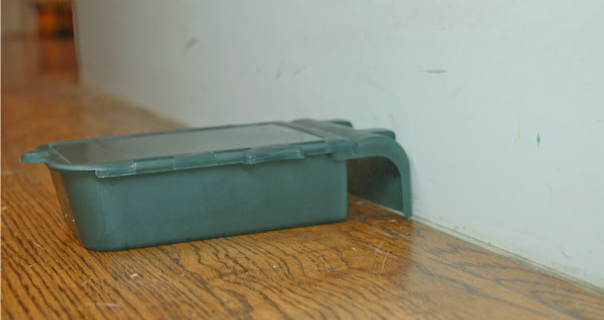
Place traps along walls and in corners
Traps should be perpendicular to the wall with the peanut butter on the inside edge
Mice like corners, so avoid placing traps in open areas
Set extra traps where you see droppings or grease marks (known as rub marks)
Secure traps to vertical posts with a zip tie
GO POISON-FREE: Do yourself (and the planet) a
favor and skip the poison. Rodenticides thin the mouse’s blood causing it to
die slowly inside your walls. Unless you’re willing to break open the drywall,
expect a smell for a few weeks. Of equal importance is the impact rodenticides
have on owls and neighborhood cats that eat mice.
It happens out of
nowhere. You’re brushing your teeth, grabbing a scrubber from under the kitchen
sink, or putting the recycling in the garage, and suddenly you see them. Your
calm, cozy, and clean home is suddenly overwhelmed with sugar ants. Hundreds of
the little creatures marching in formation seeking out sugar, water, and the
perfect place to set up shop and colonize. Gross!
How common is a sugar
ant infestation?
It’s a more common
scenario than you might think, and all it takes is something as seemingly
insignificant as an old soda can. An ant infestation is completely normal, but
more importantly, it’s totally fixable.
All these resilient and
rapidly multiplying creatures need to set up shop is some soil, a structure, or
a little bit of landscaping. If you have a tree in your yard that secretes a
sugary, glucose-rich substance, then consider that ants might be on the way.
And then also consider that your house — the one filled with sugary foods,
houseplants, and has dark, humid and moist areas like under the cabinets and
near plumbing — is like a luxury resort for the ant community. And they have
all sorts of ways to get inside to enjoy it.
Can I prevent sugar ants
from getting inside?
Poor seals on windows,
doors, cracks in the foundation, the small holes where utilities enter the
home, or even houseplants are common ways sugar ants can gain entrance to your
home and create an infestation. Once they’ve gotten inside, they’re not gonna
want to leave and they’re definitely going to try and expand their footprint.
Sugar ants do have a lot
of options for entering the home, but you have just as many to prevent them
from getting in. These recommendations are pretty straightforward and simple to
stay on top of.
Empty the kitchen trash especially if it
contains food waste. Trash cans are perfect breeding grounds for ant
infestations.
Keep eating surfaces clean like
tables, countertops, and all food prep areas. Don’t forget under the tables and
counters, as well!
Run your dishwasher preferably right after
you fill it. This dark, moist and glucose-rich environment is a sugar ants
dream.
Be careful of repellents because many over the
counter varieties for outdoor use can actually drive ants indoors, making a
small problem worse.
Get rid of standing water as a
perpetually wet ground is a very attractive environment for sugar ants.
Can I get rid of sugar ants myself?
There are definitely DIY
options for eradicating your home of an ant infestation. Typically, these fall
into two categories: quick-kill treatments and baiting. Before choosing what
option is best for you, remember to be safe.
IMPORTANT NOTE ON
SAFETY: Spray ant killers, baits, and other store-bought treatments can be
dangerous. These products contain poison and their ingredients should be
considered harmful to pets and children. Always read and follow any
instructions included on the labels of these products.
Quick-kill sprays are effective to a point, but they don’t really do the whole job.
They tend to kill visible or foraging ants, however, they are not designed to
solve the problem at its source. They can even fragment a colony and create
several colonies you will then have to deal with.
Baiting — our preferred DIY method — is sometimes more effective because ants
take the poison back to the heart of the colony, stopping the infestation at
its root. While it is our preferred at-home methodology, baiting still isn’t as
strong or as effective as a professional grade solution.
I
have a sugar ant infestation. Who should I call?
If you’ve tried to
eliminate an ant infestation on your own and you’re not seeing the results
you’d hoped for, it’s time to call a professional. DIY methods can be tricky
and the stress induced by putting up with these little pests may simply not be
worth it.
The best pest control
companies offer free, no pressure estimates and same day service for no extra
charge. Look for an exterminator that guarantees results and uses EPA approved
products that are safe for your family and pets.
Whether you have fruit flies feasting in your
fruit bowl or fungus gnats flying around your Ficus, flies can be a frustrating
foe to deal with in your home. Two tactics that a homeowner can use to address
a fly problem are identifying points of entry and removing food and breeding
sources.
The saying is true that “an ounce of prevention
is worth a pound of cure,” and your first line of defense against flies is
simple – keep them out of your home. Doors and windows should remain closed or
screened and any tears in your screens should be repaired along with caulking
any gaps around entry points into your home.
At the grocery store, avoid selecting produce
with noticeable fly activity around it and thoroughly wash fruits and
vegetables when you arrive home to remove their eggs. The same advice holds
true when selecting houseplants from your local garden center, avoid plants
with a noticeable issue and pay attention to the soil for the first several
days.
Once flies are in your home, effective
management involves identification of the fly along with the removal of food
and breeding sources. Proper identification will help to narrow the search.
There are many species of flies, each with their own set of behaviors and
feeding preferences.
For example, drain flies like to breed in the
organic buildup that occurs inside of drains and garbage disposals, while house
flies prefer to breed in the garbage and other waste. Fruit flies breed in
fermented materials like overripe fruit and sticky residues, whereas fungus
gnats like to breed in the overwatered soil of potted plants. Some flies, like
the cluster fly, don’t breed indoors but invade attics and drop ceilings just
to hibernate for the winter.
Changes to some housekeeping habits, whether it
requires you to remove garbage more regularly, clean neglected drains or
improve your food storage strategies, will help to eliminate a fly problem and
prevent the establishment of future problems.
At the end of the day an infestation, although
frustrating, is not the end of the world. If none of the above methods are
working consider calling a professional pest management company to assess the
situation and develop a pest management program to fit your specific needs and
address your pest problem. Preventative methods paired with a skilled
exterminator will help you reclaim your home.
According to the Illinois Department of Public Health, 25% of fires attributed to “unknown causes” are caused by rodents chewing electrical wires and gas lines.
Buying a commercial property is a huge undertaking and performing due diligence is critical. When buying a standalone building or a multi-unit property, be sure to have your inspector check for rodent activity. If you skip this step you might be setting yourself up for a disastrous fire down the line. Rat and mice teeth grow constantly, meaning they have to chew virtually nonstop. They gnaw metal wires and gas lines to prevent their teeth from overgrowing and suddenly you’ve got a fire on your hands.
Areas to check for rodent activity
Crawl spaces. Dirt crawlspaces in particular are vulnerable since rodents can tunnel under the skirting.
Attics are a classic spot for rat and mouse nests. Look for rub marks along walls and around entry holes.
Distinguishing between an old rodent problem from years past and a fresh infestation can be tricky. Droppings dry very quickly, so something a few days old looks similar to something a few years old. The best method is by scent (do you smell fresh urine?) and chew marks (do you see newly exposed wood or old, weathered wood?).
If you find evidence of an infestation the next step is figuring out how they got in. Look for weak points…
– Roof lines for dormers and other vulnerable joints
– Doors not closing all the way
– Entry points along supply lines
Pick the right insurance carrier
A fire in an uninsured building is devastating for almost any business owner. Every carrier is different when it comes to fire claims—that’s why it’s important to know your insurance policy inside and out. In fact it is one reason Parker Eco Pest Control has stuck with the same Seattle business insurance broker for years (shout out to Heather Hanson at Northwest Insurance Group!). We highly recommend having a relationship with a broker who understands your business model and can pull together coverage options, financing arrangements, and answer questions at the drop of a hat.
This comprehensive ebook will tell you everything you need to know about getting rid of mice in your house using natural, poison-free methods. A printable PDF version is available for free download.
A poorly maintained home on the block (we know you know the one)
A chicken coop nearby
It’s like the old adage, “You don’t have to run faster than the bear, just faster than your friend.” You don’t have to make your house mouse-proof, you just have to make it less attractive than your neighbor’s house. Mice will go where it’s easiest to get water, food, and shelter.
Natural ways to reduce interest from mice…
Bungee your garbage bins to keep the lids snug
Seal food in airtight containers like glass canisters
Clear a 1 foot perimeter around your house, including brush, wood piles, rockery, etc.
Remove standing water like bird baths
Clean up dog poop since it is full of protein, carbs, and other things mice like to eat
Keep bird seed off the ground by investing in a rodent-proof bird feeder and installing it at least 6 feet from “launch pads” like fences or trees
Trim fruit trees and berry bushes on the bottom and sides to prevent rodents coming up for a snack
Step 2. Seal up your house
How to find mouse entry holes
Check your utility lines to ensure pass-through holes are snug:
Sink supply and drain lines
Plumbing stacks on the outside of the house
Gas lines coming into your kitchen or laundry room
Electrical lines, particularly through exterior walls
Verify all utility vents have tight wire mesh and snug pass-through holes:
Dryer vents
Bathroom fan vents
Kitchen fan vents
Weather-proof your doors:
Garage doors should have weather stripping to close gaps
Cracks in concrete pads (such as the area below your garage door) should be filled for a seamless seal with the door above
Exterior doors should hang plumb and square so they seal tightly
Scope out your roof for easy access points, then double down on wire mesh:
Dormers have complex joints between shingles, fascia boards, and windows that require precise cuts to stay mouse-proof. Time and poor craftsmanship can create gaps.
Attic vents are necessary to keep moisture at bay but can decay with time. Wasp nests, bird nests, and other animal activity can also puncture your vent grates.
Chimney caps are metal boxes that cover the hole at the top of your chimney. Check yours for gaps or rust. If you don’t have one, buy one for less than $100.
How to install wire mesh for mouse-proofing
Select your wire mesh: Pick a mesh with quarter inch holes and make sure it’s easy to bend. We recommend galvanized mesh since it has a special coating to resist rust, making it last longer. You can buy products like this at most hardware stores for about $10.
Select your screws: The ideal screw for installing mesh has a large head so it doesn’t pass through the holes in the wire. Again, we recommend galvanized screws to resist rust. Try to keep the length to about an inch and keep the diameter to a minimum. Using a oversized screws means making oversized holes in your house.
Installing your wire mesh: Cut a section of wire that extends at least an inch beyond the edge of the hole in all directions. Bend the wire so it fits snuggly inside the corner or around edges. If there is slack in your mesh the mice will simply push under it. Anchor the mesh with screws, about one every four inches. When on your roof, DO NOT anchor directly into your shingles or you risk creating a leak.
Can you use spray foam or steel wool instead of wire mesh?
Yes, but we don’t recommend it.
Step 3. Trap mice already in the house
There are two key factors in making sure you’ll get rid of mice naturally– picking the right trap and placing it properly. No matter what type of trap you use we recommend baiting it with peanut butter. It’s cheap, natural, and incredibly tempting to mice.
Why you shouldn’t use poison baits
By far the most common type of mouse bait is an anticoagulant rodenticide. That’s a fancy way to say that it thins the animal’s blood, causing them to bleed out and die slowly.
It’s cruel to kill the animals slowly over time.
Poison has terrible consequences for predators that eat mice like urban owls and your neighborhood cat.
The mice die in your walls. Some pest control companies claim the mice become thirsty, seek water, and then die outside. This is nonsense.
Get more information on the negative impacts of rodenticides from the Audubon Society.
Owl image is courtesy of the Audubon Society
So why are poison baits so common?
Traditional pest control companies rely heavily on poison bait because it is cheap and any employee can do it without training. Setting out a bait box is faster and simpler than doing an inspection, sealing entry holes, and setting traps in strategic locations.
Types of all-natural mouse traps
T-Rex snap traps are reliable, humane, & reusable
The plastic T-Rex snap trap from Bell is a highly sensitive trap with interlocking teeth. They are much heavier than a traditional wooden trap so they stay put. You can also wash and reuse the traps indefinitely, so they are more eco-friendly than disposable traps. The plastic teeth have a lot of force, making for a quick and humane death. The traps have small holes in the base so you can feed a zip tie through and secure the traps on vertical pipes and beams. Parker Eco Pest Control uses these traps exclusively (and no, they didn’t pay us to say that!).
Wooden snap traps are tough to set properly
Victor mouse traps are the stereotypical trap you see in the movies baited with a piece of swiss cheese. Setting these traps involves pulling back the pin carefully, setting the bait, and putting it in the right spot without triggering it. They’re pretty finnicky and go off without catching a mouse often, especially compared to the T-Rex.
Glue traps can be cruel
Glue traps come with a lot of well-deserved horror stories. Mice have been known to languish in the glue, starving to death. They sometimes chew off their own legs to free themselves. If you opt for a glue trap we suggest you use it ONLY under close supervision. As soon as you catch a mouse you should either:
Put on gloves and wipe the mouse down in olive oil to free it from the trap. Set it free outside.
Fill a bucket with water and drop the mouse and attached trap in for a quick death.
Live traps require daily supervision
If you can’t bring yourself to kill a mouse you might lean towards live traps. Simply place a tasty treat inside and let the door snap shut once the mouse is inside. Traps like this MUST be checked daily or you risk leaving a mouse to die slowly from starvation – this is far worse than a quick death from a snap trap.
Where to set mice free Washington State law (and many other states) does not allow for relocation. That means you cannot release the mouse in a local park a mile away. Your best bet is releasing it back on your property and hoping you did a good job sealing up entry holes in your home. What if the mouse isn’t dead? Sadly, mice can sometimes set off a trap with a foot instead of their head. The humane thing to do is put the animal out of its misery immediately. We recommend filling a bucket with water and placing the animal—trap and all—into the water until it drowns.
Where to put the traps
The simplest solution is putting traps where you find the most evidence of activity like droppings, urine smells, or rub marks.
There is some finesse to how the traps are positioned. Mice are neophobic, meaning they are suspicious of new things. You need to make it as easy as possible to stumble into the trap. Look for narrow paths next to walls and hidden corners. Do not waste your time by simply opening your attic door and setting a trap on the open space inside.
Diagrams are courtesy of the Internet Center for Wildlife Damage Management
Step 4. Natural mouse control outdoors
Automatic traps
The A24 from Goodnature is a self-resetting trap that kills 24 mice with a single cartridge. Set it up outside, sit back, and wait. Parker Eco Pest Control will gladly install one.
Owl Boxes
Owls eat as many as 12 rodents a night! Installing an owl box gives you about a 50% chance of getting an owl every nesting season. Learn more about owls for natural mouse control on our blog.
As rodent populations worsen in King and Snohomish counties, more and more cities are passing rat abatement laws for construction projects. Seattle, Kirkland and Shoreline have passed rules requiring developers to control or eradicate the rodent population when “clearing, grading or demolishing” on a jobsite.
Why do Seattle rat
abatement rules exist?
Buildings slated for demolition can be ideal habitats for rodents. Older structures are often full of holes for easy entry. Vacant places have nesting material like insulation, clothing, or furniture. The ideal spot for a rat is close enough to humans that they have access to food (like our garbage) but far enough away that they can nest and breed without being disturbed. That empty house on the block is the perfect hideaway!
When a vacant structure is demolished the rodents explode
out into the surrounding neighborhood. Add in the increasing density of King
and Snohomish counties and you’ve got a recipe for disaster.
How developers comply
with the law
If your project will include “clearing, grading or demolition”
you must have a pest control professional with a license from the Washington
State Department of Agriculture (WSDA) inspect the property. If evidence of
rodent activity is found (droppings, nesting, skeletons, old bait boxes, etc.) you
must start an abatement plan at least 15
days prior to beginning work. The plan should extend up to the planned date
of demolition. If the inspection reveals no evidence of rodent activity then you’re
home free! Just have the pest control company write up a declaration.
Paperwork for a rodent abatement plan must be written up by a pest control professional and submitted to the city by the developer
How much do rat abatement plans cost?
Parker Eco Pest Control charges $200 for an inspection. If no activity is found, that’s all you pay.
If we do find evidence of an infestation, the fee is usually $399 (the $200 inspection fee + $199 abatement fee). That can vary with the size of your project. After the plan is complete, we write up the paperwork proving that your property meets the city requirements. You hand the paperwork into the city and proceed with demolition.
What a rodent abatement
plan looks like
A lot of pest control companies simply show up and drop bait
boxes, then collect a large fee. Parker Eco Pest Control actually conducts an inspection.
It’s not uncommon for us to clear a structure as rodent-free during
this inspection. We would rather be honest with you and build a long-term relationship
than collect a quick buck.
If the inspection uncovers evidence of an infestation we’ll
develop a plan for dealing with the problem. This usually requires several visits
to monitor activity up until demolition.
We conduct an exterior inspection to see where they are getting into the structure.
We seal up any holes greater than ¼ inch with sealants, foam or other materials.
We remove anything that might be attracting them to the property.
We place traps in appropriate places.
Have questions about rat abatement before demolitions? Get in touch! Call 800-ECO-1698 or email Info@ParkerEcoPestControl.com.
After a warm reception in Seattle, Parker Eco Pest Control is growing north! We’re pleased to have a second location in Northwest Everett. We’re enjoying brews at the Scuttlebutt, views off Jetty Island and Latin fusion over at Sol Food Bar and Grill. Our service list and prices are the same but the team and customer service continue to expand with our new receptionist Brooks, and a new technician named Isaiah. We’re also pleased to announce online appointment requests. So if you live between Lynnwood and Everett we’re delighted to answer all your eco friendly pest needs!
Our service area now stretches from Seattle all the way to Everett, following the I-5 corridor.
Whether you’re looking to solve the problem yourself or just need some tips between regular visits from Parker Eco Pest Control, we hope you find this information helpful.
Keep your eyes open
Ants use scouts to find new food sources. A single ant out on patrol will locate food and create a trail back to the nest for other ants to follow. More and more ants swarm the area until the food is gone. If you see a single ant roaming across your counter, kill it.
Clean and seal your home
Your kitchen might already be clean but consider taking it to the next level. Wipe your counter and table down with a white vinegar and water mixture after food prep. Clean all dishes immediately. Store your food and dog food in air tight containers. Take your trash out daily. Even the smallest bits of food can attract an ant swarm.
There are also some basic home repairs that can make your home less hospitable for ants. Take a look around your house for damp or decaying wood. Do you have a leak under your sink? Is there a wet wood pile against the exterior wall? You can’t prevent ants from creating nests outside but you can calk cracks around doors and windows so it’s harder for them to enter. If you aren’t sure where the ants are coming from, stage a stakeout. Follow them all the way to the exterior wall where they are entering and seal it off. You likely can’t seal every hole, but look for the major ones.
Make a DIY eco repellant
Sprinkle diatomaceous earth along cracks where you see ants crawling. Distribute a thin, even layer of dust. This is not an immediate solution but it’s safe for kids and pets. It will slowly dehydrate and kill the bugs after coating them. This is one of our favorite products.
Wipe up ant trails with a mixture of vinegar and water.
Put a few drops of essential peppermint oil on a cotton ball. Wipe down cracks where you see ant trails and entry points. You can also leave the infused cotton ball in a pantry, cabinet or entry point. Refresh every few days. Be careful not to damage woodwork with the oil.
Plant a garden
While it might seem counterintuitive to plant more vegetation, consider some ant repelling herbs. Lavender, rosemary and mind have all been shown to repel ants.
Good luck! Feel free to call us if you have any additional questions about ecofriendly methods for controlling ants.










 Ants use scouts to find new food sources. A single ant out on patrol will locate food and create a trail back to the nest for other ants to follow. More and more ants swarm the area until the food is gone. If you see a single ant roaming across your counter, kill it.
